Rasam Arabzadeh
Carpet Museum Tehran
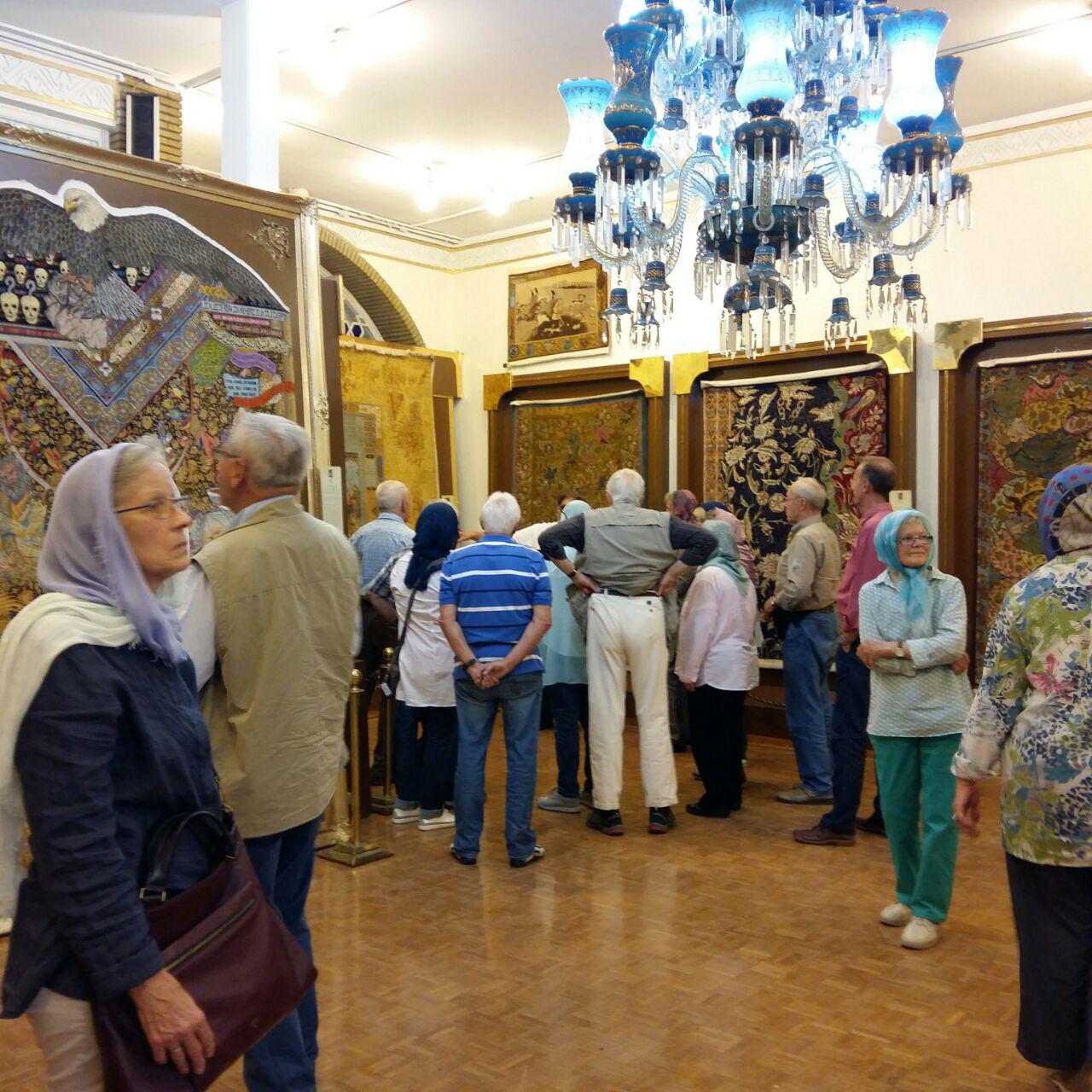
The Rasam Arabzadeh Carpet Museum in Tehran houses more than eighty carpet panels and kilims by Master Seyyed Abolfath Rasam Arabzadeh (1914–1996), an artist who transformed the traditional Persian carpet into a canvas for poetry, philosophy and fine visual arts.
Address
No. 6, First Boostan Ave. (Shahid Zomorrodian), Pasdaran St., Tehran, Iran
Opening Hours
Saturday to Wednesday: 09:00 – 15:00
Thursdays & Fridays by appointment
Direct Contact
Metro Station
Shahid Zeynoddin Station (Line 3)
5-min taxi drive to Pasdaran
A Bridge Between Classical Heritage & Modern Expression
Rasam Arabzadeh grew up beside his artist father in Tabriz, learning drawing, natural color chemistry, tile design, calligraphy, poetry, and classical music. In his carpets, he unified ancient symmetrical knotting techniques with bold artistic innovation.
He introduced over 800 custom shades of plant-based dyes into Persian weaving, allowing subtle painterly chiaroscuro, human portraits, and philosophical verses from Rumi, Hafez, and Ferdowsi's Shahnameh to come alive upon silk and wool warp.
Learn More About the Master's StyleFlagship Masterpieces on Permanent Display
Highlighted works reflecting poetry, epic history, and Persian architecture
Ferdowsi at Sultan Mahmoud's Court
Nine years of weaving with more than 800 distinct natural colors and 15 illuminated scenes of the Shahnameh in borders.
The Human Family (Bani Adam)
A woven manifestation of universal human solidarity inspired by the immortal poetry of Saadi Shirazi and the mythical Simurgh.
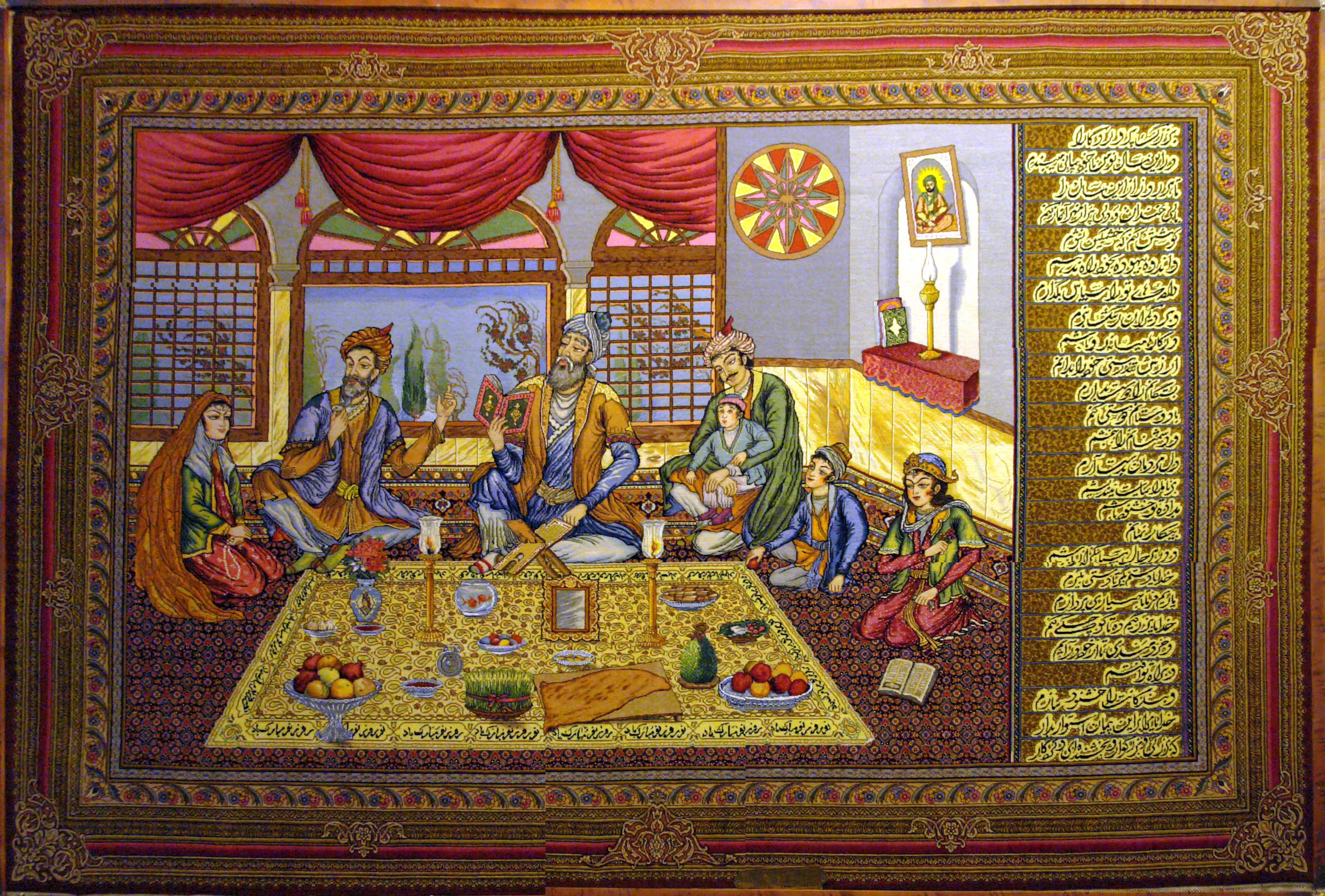
Nowruz (The Haft-Sin Tableau)
Celebration of the Persian New Year and vernal equinox, harmonizing nature's awakening with fine botanical dyes.
Wheel of Fate (Gardooneh Roozegar)
A three-year meditative masterpiece translating cosmic destiny and spiritual verses from Rumi's Masnavi into woven geometry.
The Saqi-nameh Series
A delicate set of small carpet panels weaving verses from classical poets including Hafez, Nezami, and Jami.
The Khatam Pattern Carpet
A remarkable crossover translating micro-marquetry woodwork (Khatam-kari) into microscopic silk and wool knots.
Experience Iranian Fine Weaving in the Heart of Tehran
The museum welcomes individual travelers, university delegations, and diplomatic missions for guided English tours and weaving demonstrations.